What is balanced literacy?
The term “balanced literacy” is not new. It has been used to describe literacy programs that balance reading and writing to children, reading and writing with children, and reading and writing by children.
The components of a 'balanced literacy' approach are: The read aloud, guided reading, shared reading, interactive
writing, shared writing, writing workshop and word
study."
Using balanced literacy in your classroom allows even the youngest learners to be immersed into literacy. There is a lot of research backing the method of balanced literacy. Some of the research says, "Balanced reading instruction continues to be the major deterrent against reading failure (Adams, 1990; Hiebert, Pearson,Taylor, Richardson, & Paris, 1998; Snow et al., 1998). Balanced literacy is even supported by many of the countries' leaders in literacy including Marie Clay, Irene Fountas, Gay Su Pinnell, Patricia Cunningham, and Ralph Fletch, Lucy Caulkins, and Richard Allignton.
But how do we implement ALL of the components EVERYDAY?
Here is my schedule in my classroom that allows me to fit it all in. I highlighted each component of Balanced Literacy.
7:40 - Announcements
7:45 - Morning Meeting and Buzz Book (Morning Message)
8:15 - Guided Reading Group 1 and Daily Five
8:30 - Mini-lesson 1 (Phonics and Shared Reading)
8:45 - Guided Reading Group 2 and Daily Five
9:00 - Mini-lesson 3 (Sight word focus/word wall)
9:15 - Guided Reading Group 3 and Daily Five
9:30 - Recess
9:55 - Science
9:30 - Recess
9:55 - Science
*Read Alouds and Notebooks are used frequently
10:15 - Guided Reading Group 4 and Daily Five
10:47 - Lunch
11:17 - Read Aloud
10:47 - Lunch
11:17 - Read Aloud
11:30 - Writer's Workshop
12:15 - Specials
1:00 - Math
12:15 - Specials
1:00 - Math
*Read Alouds and Notebooks are used frequently
2:10 - Centers
2:10 - Centers
*Reading with friends, word work, and independent writing are used daily
2:30 - Pack up
2:35 - Dismissal
2:30 - Pack up
2:35 - Dismissal
Wowzers! What a literacy-filled day!
I created this little helpful handout for you to see the components of Balanced Literacy in a table form.

Now I am not claiming to be an expert, but I have figured out a few tips and tricks to making sure it all fits in each day.
1. Stay on schedule ~ There are so many, many, many parts to our busy day at school. I make frequently check the clock so that we don't run over on any part of our day and miss another. Sure, there are times we are doing big projects or there are special events to attend to, but most days should be routine. This helps me and the little cuties in my classroom. I also keep a picture schedule in my classroom.

(Grab these schedule cards for free by clicking here.)
2. Be prepared ~ This is a MUST for being successful in implementing Balanced Literacy. (It's a MUST in being an effective teacher so our cuties can be successful.) I prepare everything the day before I leave and place everything in a bucket next to my rocking chair in my whole group area, and I mean everything - every google eye, every pair or dice, every piece of paper. I will waste precious time if I am pulling things out of my cabinets when I should be instructing.

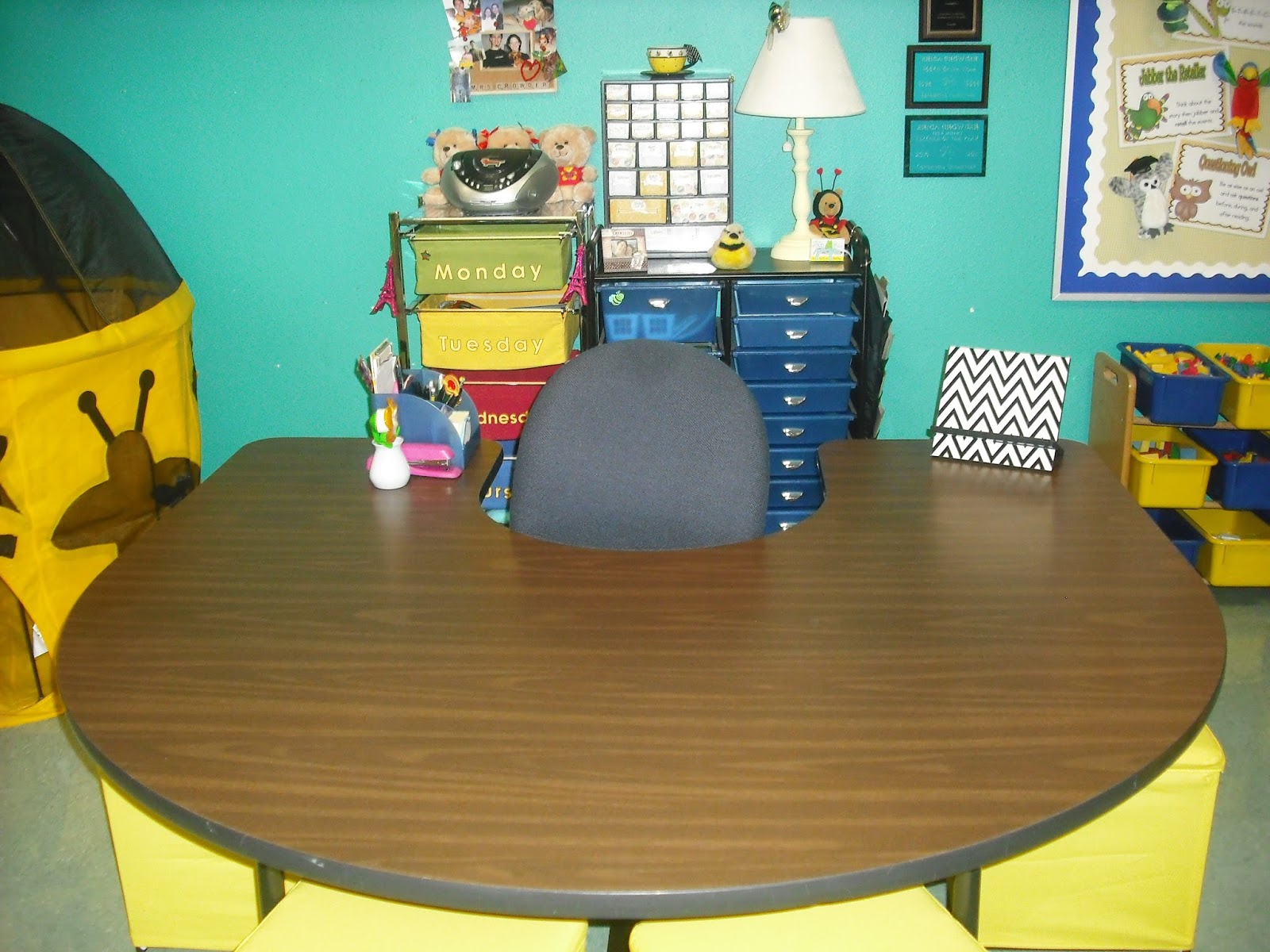
I plan out each reading group the day before as well and store all of the materials in this blue cart right behind my small group table. Each small group has a drawer to hold the materials that are needed.
3. Collaborate ~ There is just simply TOO much to do alone. Talk with your grade level teammates about how they do things and share materials and ideas.
What does each component look like?
There is so much that goes into each part of Balanced Literacy, so I am just going to break down a few of them for you today.
Guided Reading
Guided reading is one component of a balanced literacy
program that allows teachers to meet the needs of all students –
regardless of their level of proficiency – so they become stronger, more
confident readers. Through this strategy, students are met right
where they are in ability. Because they’re with students who are on
their level, they’re much less likely to feel anxious or embarrassed
about how they measure up to the skills other students.
This is so
important.
One component that makes this so successful is the teacher works in a
small group setting. That way, students quickly learn workable
strategies to process and construct meaning of words. This is what
drives balanced literacy instruction. As their reading skills strengthen
they gradually move on to more difficult reading with concentrated
teacher guidance.
I created this lesson plan to help organize and plan for reading groups.
I teach 4 groups a day, but I have 6 reading groups. Some groups don't meet with me everyday. Meet with your lowest readers DAILY.
When I am teaching a guided reading group, my other students are in their Daily Five choices. The five "dailies" are Word Work, Work on Writing, Read to Self, Read to a Friend, and Listen to Reading. This is an idea that was started my Gail Boushey and Joan Moser and implements many parts of balanced literacy. I have written many posts about implementing it into my classroom and have a video about it. It shows me checking in my students before a reading group and their independence while working in the Daily Five choices.
Much of my Daily Five knowledge came from attending a workshop presented by the authors.

I have also learned a lot from reading the book, collaborating with teachers, and Pinterest.
Writer's Workshop
Writer's Workshop is an interdisciplinary writing technique
which can build students' fluency in writing through continuous, repeated
exposure to the process of writing.
Teachers can introduce elements of Writer's Workshop
at any elementary grade. Ideally, however, the process begins in Kindergarten.
The three parts to writer's workshop include a mini-lesson in which the teacher models writing and uses mentor texts to show good writing, independent writing and conferences, and share time.
The mini-lesson is simply a short lesson modeling writing. I have a writing folder just like my students' folders and I think out loud and model what to do with the folder and how to write a new piece or continue an old piece.


During independent writing, students are writing independently in a writing partnership while I am in a conference with a small group. When students are with their writing partner they are working independently, but using the partner for help as needed. Each partnership uses a writer's toolkit.


You can read more about our writer's toolkits here.
I schedule my writing conferences on this chart. Each student comes on the same day every week.

During the conference time I help students edit their work and type them up if they're ready to publish. When students publish, they illustrate their typed books with our publishing tools, dedicate their books, and make a cover.


We also set goals in writer's conferences.

During share time, the students who have earned the share bears for working hard during independent writing time get to share their current piece of writing, no matter where they are in the process. When students share their piece, I place it under the document camera and the student reads their story aloud. Then we ask the listeners for two "stars" and one "wish" about the writing piece. Then we check completed sentences and make sure they're "smiley sentences".


I learned a lot about writer's workshop from a training by Lucy Caulkins.

There is so much more to Balanced Literacy, but this is a start to helping you "balance" it all.
There are a lot of freebies on my website for balanced literacy.